New to gamefowl? Start here.
A good start begins with preparation, patient observation, and people who will answer your questions.
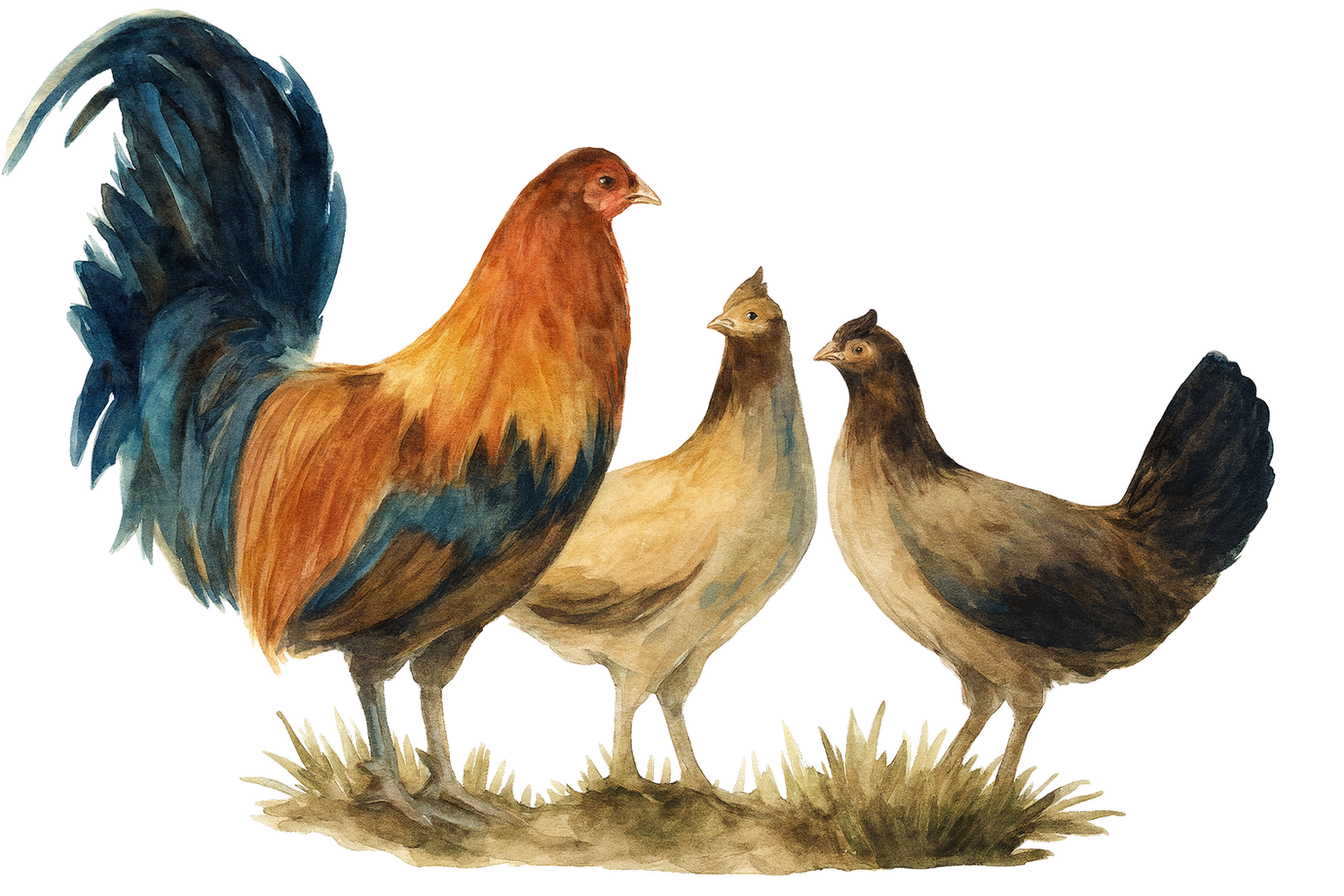
Gamefowl are domestic chickens associated with traditional game breeds and breeding lines. Breeds such as Old English Game have a history that includes fighting; today, keepers also maintain them for breed preservation and exhibition. Their temperament and housing needs deserve careful attention. See the Livestock Conservancy’s Old English Game profile for one breed example.
Before you bring birds home
Check local poultry, rooster, zoning, and nuisance rules with the appropriate local officials. Find a veterinarian who sees poultry, plan your daily care routine, and budget for housing, feed, bedding, and unexpected care. Choose birds that fit your space and experience.
Prepare housing first
Provide protection from predators and weather, good ventilation, dry bedding, shade, and room suited to the birds’ size and activity. Keep feed and water accessible. Plan separate secure spaces for birds that cannot live together safely, especially incompatible adult males. Separate birds before aggression causes injury. Read University of Kentucky Extension’s housing guidance.
Choose carefully and keep new birds separate
Ask the breeder about age, origin, temperament, health history, and any testing records. A bloodline name alone does not document ancestry or health. Do not bring home birds that appear ill.
USDA recommends keeping new birds separate for 30 days. Arrange separate equipment and a care routine that avoids carrying contamination between groups; ask your veterinarian about testing and your flock’s circumstances. Separation reduces risk but cannot guarantee freedom from disease. See USDA’s new-bird checklist.
Build a steady daily routine
Offer a complete poultry feed appropriate for the birds’ age and purpose, with clean, fresh water available. Treats and scratch grain should not replace a balanced ration. Ask your veterinarian or Extension office before changing a feeding program or using treatments. University of Minnesota Extension explains basic feeding and flock care.
Learn more about gamefowl nutrition in Gamefowl Nutrition by Carey D. Blackmon, available on Amazon. Affiliate link.
Watch appetite, drinking, activity, breathing, droppings, and body condition. Clean equipment, use dedicated footwear, and limit contact with wild birds. Sudden deaths or unusual illness need prompt veterinary advice. Use USDA’s Defend the Flock resources to build your biosecurity routine.
Visit a show and learn the process
Contact the organizer before attending. Ask about public admission, classes, entry deadlines, bird identification, health documents, and current testing or movement requirements. Observe how experienced exhibitors handle and care for birds. Follow the host’s biosecurity rules.
NPIP participation concerns specific disease-testing and certification programs; it is not a promise that a bird is free of every disease or eligible for every event. Verify your event’s requirements. Learn more from USDA’s NPIP reference.
Keep useful records
Record each bird’s identification, hatch date if known, source, documented parents, health observations, treatments, and show results. Mark unknown details as unknown. Clear records help you make better decisions and give the next keeper accurate information.
Connect with UGBA
Founded in 1975, the United Gamefowl Breeders Association connects people interested in gamefowl. Explore our About page, membership options, and contact information. Tennessee is affiliated; its chapter contact information is pending.
Read the FAQ · Explore the glossary
Educational guide • Updated November 5, 2026