Gamefowl glossary
Plain-language definitions for newcomers. Show classifications and eligibility follow the rules of the particular event.
Beginner guide · Frequently asked questions
Birds, ages & sex
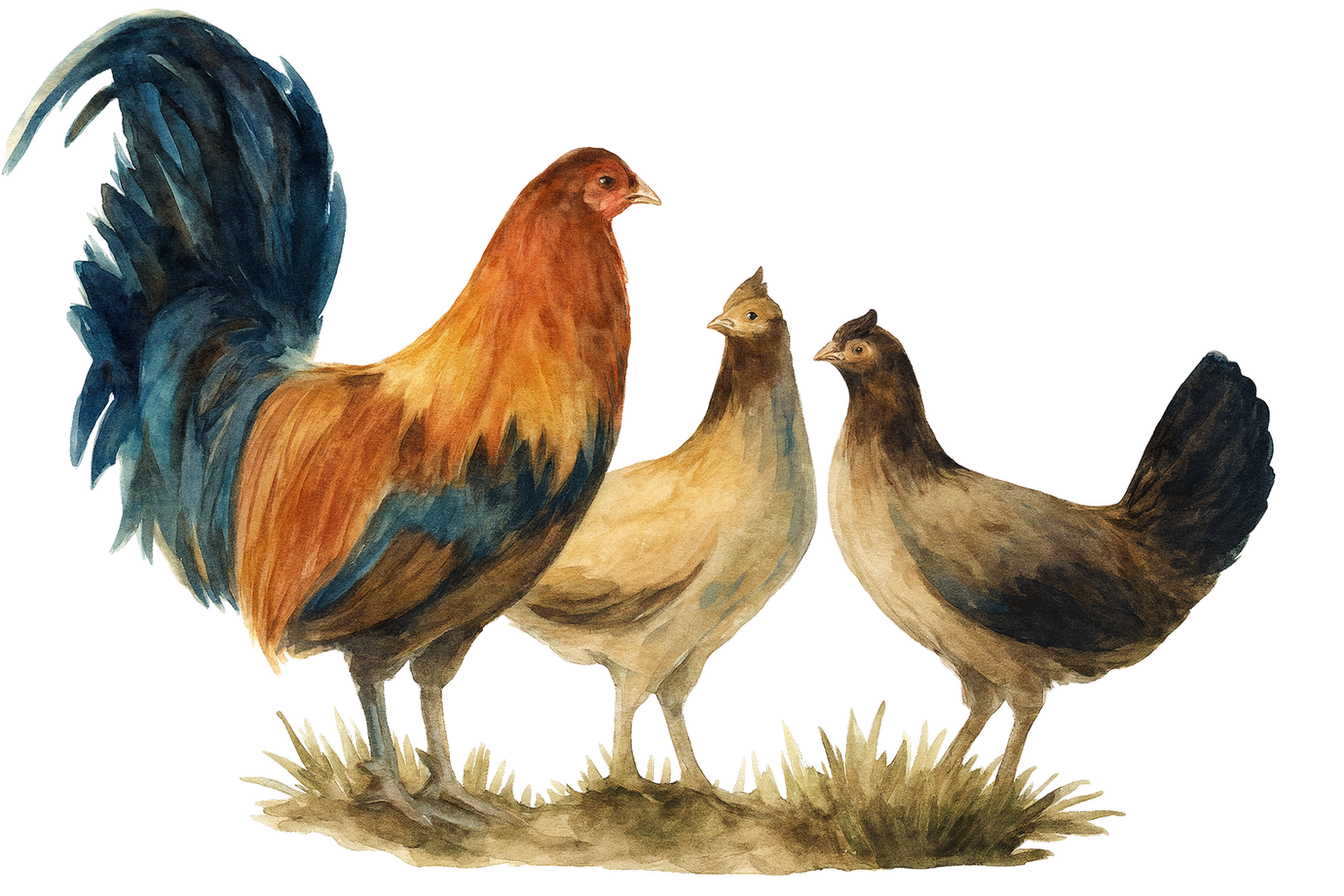
Gamefowl
Domestic chickens associated with traditional game breeds and breeding lines. The term covers more than one breed.
Chick
A young chicken in its early growth stage.
Cockerel
A male chicken under one year old.
Cock or rooster
An adult male chicken. In age-based exhibition classes, “cock” generally means a male one year old or older.
Pullet
A female chicken under one year old.
Hen
An adult female chicken, generally one year old or older in exhibition terminology.
Reference: Indiana State Poultry Association glossary. Confirm age cutoffs in your show’s entry rules.
Breeding & identification
Breed
A recognized group of chickens with inherited distinguishing characteristics.
Variety
A subdivision within a breed, often distinguished by color, pattern, or comb type.
Bloodline
A family or line of birds maintained through breeding. A familiar line name alone is not a documented pedigree.
Pedigree
A record of ancestry. Its usefulness depends on accurate identification and records of parentage.
Hatch date
The date a bird emerged from its egg. Record an estimate as an estimate when the exact date is unknown.
Leg band
An identification band worn on a bird’s leg. Check fit and condition regularly as the bird grows.
Comb
The fleshy structure on top of a chicken’s head.
Wattles
The fleshy structures hanging below a chicken’s beak.
Breed and variety reference: Indiana poultry terminology.
Daily care & flock health
Brooding
Caring for young chicks, including appropriate warmth, shelter, feed, and water.
Broody
Describes a hen showing the instinct to sit on eggs and hatch them.
Molt
The natural shedding and replacement of feathers.
Complete feed
A formulated ration intended to supply the nutrients needed for a specified age or production stage when fed as directed.
Biosecurity
Everyday practices that reduce the chance of bringing disease into a flock or spreading it between birds and premises.
Quarantine
Keeping incoming birds apart from the established flock for observation and risk reduction. USDA recommends 30 days for new birds; ask a poultry veterinarian about your situation.
Isolation
Separating sick or suspect birds from others while you seek veterinary advice and follow a disease-control plan.
Care references: University of Minnesota Extension · USDA biosecurity basics · USDA new-bird checklist
Shows & organizations
Exhibition
Showing birds for evaluation under an event’s published rules.
Class
A grouping used to organize judging or entries. A show may divide birds by breed, variety, age, sex, or another stated criterion.
Breed standard
A written description of the desired characteristics of a breed or variety. Use the standard recognized by the event you plan to enter.
NPIP
The National Poultry Improvement Plan, a voluntary federal-state program with specific poultry disease-testing and certification classifications. Participation is not a guarantee against every disease or a substitute for checking event and destination requirements.
UGBA
United Gamefowl Breeders Association, founded in 1975. The official website is UGBANow.com.
Affiliated state
A state organization affiliated with UGBA. See the current affiliated-state list or contact UGBA for help.
Program reference: USDA’s NPIP overview.
Have a term you would like explained? Send UGBA a question.
Updated November 5, 2026